|
Author Libba Bray could easily have a second career as a comedian. At the recent SCBWI Summer Conference in LA, she had me and most of the other 1350 people in the audience laughing our heads off. But for me, the most memorable thing she said was down right serious. When reading a book that doesn’t grab her, Libba says she feels like it didn’t cost the writer anything to write [it]. To write with honesty, it’s got to cost you something. 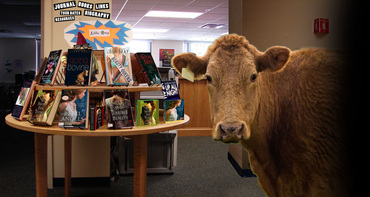 Libba Bray's books Each story demands something different. Often the demand is to realize you have preconceived notions and be open to learning about yourself as well as your topic. Patsi Tollinger worked for nearly ten years on her picture book biography of jockey Isaac Murphy. It was a sense of injustice for Isaac that motivated me in the beginning. Later, after I started digging into the research, Isaac turned into my teacher and wouldn’t turn loose of me until his story was done. I thought I knew a lot about the complexities of southern history. Isaac convinced me otherwise. 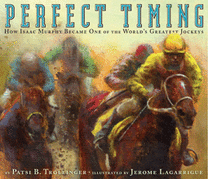 Isaac Murphy, the first jockey to win three Kentucky Derbies, had nearly disappeared into history. With the help of Illustrator Jerome Lagarrigue, Patsi brings him to life beautifully in PERFECT TIMING. Do you agree that good writing must cost the author something? I’d love to hear other writers thoughts about this. Please comment and share your personal experience. 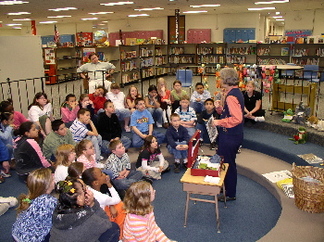 Patsi Tollinger speaks to students at Fallon School about Jockey Isaac Murphy. Check it out. Here’s my writing group gathered to celebrate my book deal. Yep. That’s right. Book deal. Oh, you want me to say it again? Book deal. PURE GRIT, a true story about 99 P.O.W. nurses and how they survived World War II despite overwhelming odds, sold to Howard Reeves at Abrams Children’s, many thanks to my agent Stephen Fraser of the Jennifer DeChiara Literary Agency. 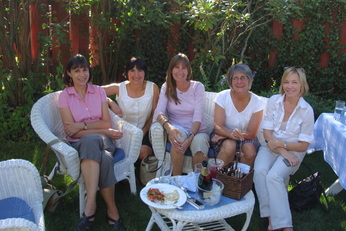 Left to right, Beth Cooley, me, Meghan Nuttall Sayres, Claire Rudolf Murphy and Mary Douthitt. I lift my glass to them. In good times and in bad, writers need a supportive critique group. I couldn’t do with out the friendship and savvy of these marvelous women.
More celebrating later, right now my head is buried in research and my fingers flying across the keyboard to meet my fast-approaching deadline next year for the 2013 release. He had a remarkable sense of dignity and self-worth at a time when African-Americans were encouraged to believe they were worthless. That made him a great man in the truest sense of the word. That’s how Patsi B. Tollinger describes Jockey Isaac Murphy, the subject of her biography PERFECT TIMING. But Patsi didn’t know about Isaac’s strength of character when she started the project. 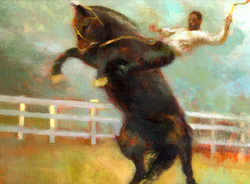 The 32-page book has only 900-words, but Patsi spent eleven years writing it, visited seven libraries and museums and reviewed nearly 80-thousand pages of information. Five years after publication, she’s is still regularly talking about Isaac, and she’ll continue for years to come. How do you get so hooked? I stumbled across one particular historic photo, says Patsi. The picture confounded me. Here’s the scene: Six men are dressed in fine suits and hats, wearing the old-fashioned ‘bling’ of the 1890s (pocket-watches). The date on the picture is August 1890, and even though some states actually had laws forbidding interracial socializing, five of these men are white and one is black. The lone black man is Isaac Murphy, and as I soon learned, the picture was taken at a party given in his honor. From that one picture, I got the feeling that Isaac was an extraordinary man who, in some ways, triumphed over the racial prejudice that was rampant in the late 1800s. I wanted to get to know him. And now we can, too. Next Wednesday: What Isaac's biographer learned from him and why it matters. 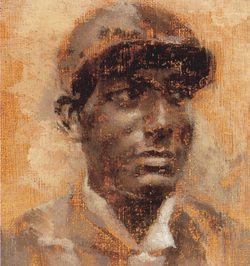 No good comes from comparing yourself to other writers. We all know it, but we still do it. Even Shakespeare did it. Witness Sonnet 29. …I all alone beweep my outcast state… And look upon myself and curse my fate, Wishing me like to one more rich in hope, Featured like him, like him with friends possess'd, Desiring this man's art and that man's scope… 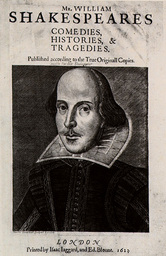 Though he comes around in a mere fourteen lines to recognize the wealth of being himself, we have no idea how long in actuality he might have stewed in this bitter brine of discontent. Or how often.
But the man shows us how to diminish this demon when it appears, as it is bound to do time and again. In simply recognizing he’s comparing, Shakespeare remembers his true self. I imagine him laughing for a moment about the absurdities of human nature, picking up his quill and getting back to work. I didn’t have much time on my visit to the Getty Museum. I bypassed the tours, wandering through the gardens, then quickly through the exhibit of Medieval and Renaissance Sculpture and Decorative Arts. Not much taken with that; I thought, maybe I’m just not a visual person.
Being a journalist by trade, maybe the 19th and 20th-century photographs would be more to my taste, but I got lost in the West Pavilion among the Impressionist paintings. I liked Van Gogh’s Irises, and Monet’s Rouen Cathedral in Morning Light. and Wheatstack in the snow. As I moved on to Monet’s Still Life with Flowers and Fruit an unexpected emotion filled my chest and throat. Tears rose to my eyes. The white flowers in the center of the painting, the depth of the fruit in the foreground, what was it about those everyday images that pulled me and held me still. I sat on a bench to view the paintings one by one, brush strokes of light drawing me in as though I might find all the meaning I’d ever sought. Not a desperate seeking, rather in the blue shadows behind the wheatstack I paused, drinking in the wonder that overflowed the cup of the unknown. Savoring the mystery more powerful than all the answers I might chase on another day. Though my cheeks grew wet as people came and went, I stayed as long as I dared, leaving with only a few moments to scan the exhibit of photographs taken before, during and after Cuba’s 1959 revolution. I tried to memorize the candids of Che Guevara, so I could describe them later to my teenage son. This boy, a reluctant reader with no interest in history found something in Che that induced him to read a book one summer vacation. The hidden depths in all of us wait to be awakened. |

I'm fascinated to discover little-known history, stories of people and events that provide a new perspective on why and how things happened, new voices that haven't been heard, insight into how the past brought us here today, and how it might guide us to a better future.
I also post here about my books and feature other authors and their books on compelling and important historical topics. Occasionally, I share what makes me happy, pictures of my garden, recipes I've made, events I've attended, people I've met. I'm always happy to hear from readers in the blog comments, by email or social media. Archives
September 2023
Categories
All
|