Writer's Block? Try A Visit to the Dentist 01/11/2012
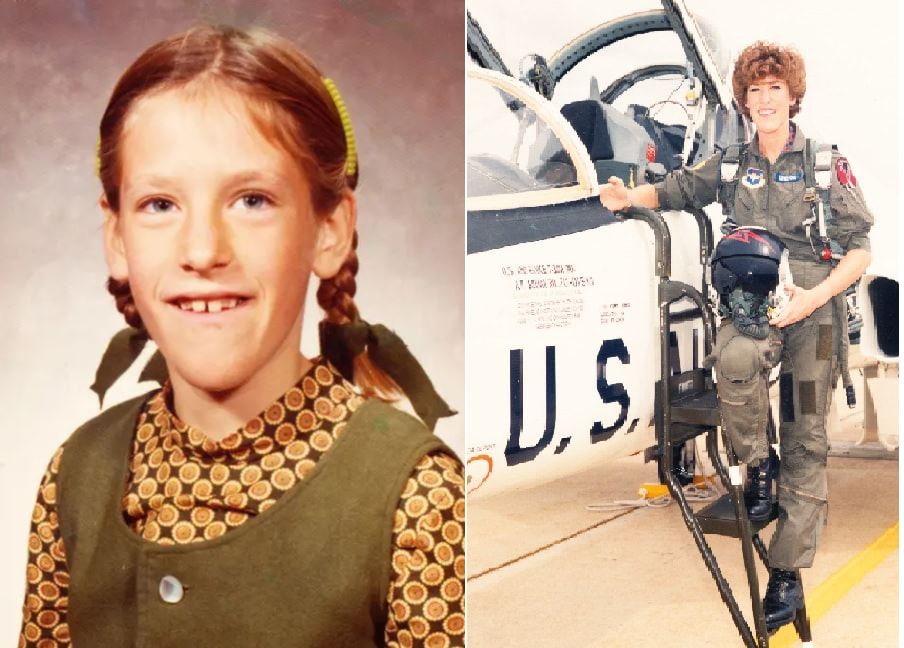
I needed a relaxing break from my WIP yesterday, so I went to the dentist for a filling and a crown. After all, which is worse? A shot of Novocain, or realizing you were way too desperate when you signed that contract promising to write a novel in six months? Seriously though, these days, a visit to the dentist really is relaxing. They put you back in a soft reclining chair with a comfy pillow. You don’t even have to hold you own mouth open. They have this new apparatus, nice soft plastic, no sharp edges, that props your jaw wide, retracts your tongue and vacuums spit. Not an ounce of effort. The work will be trying to find a second job when the bills comes. You know, I used to feel badly when I needed a tooth repaired, like it was a moral failure of some kind. But now I’m thinking about how many years my teeth have been chomping away....Just think if I had car that lasted that long. Almost makes you want to brush and floss. No, the real reason I like going to the dentist is the nitrous-oxide. For a girl who always “said no to drugs” it’s quite a trip. This time I came back to reality with the entire plot for a paranormal trilogy. It’s about a demon dental hygienist who tortures her victims by forcing them to choose a fluoride rinse—wintergreen, cantaloupe or bubblegum? When I was kid I always picked the flavor I liked best. I went though several flavors before I figured out you pick the one you like least because whichever it is, you’ll never enjoy it again. Actually, my favorite thing about getting a tooth filled—eavesdropping on the person in the next chair. I swear some people must think the dentist is their hairdresser. Talk about plot material! Too bad So next time you need inspiration, take a break and go to the dentist. But don’t imagine you’ll come out with the perfect smile advertised in the office photos. If you’re a writer, you’re in the wrong income bracket for that. But they say good fiction taps into universal feelings. Maybe you can turn a root canal into the next Hunger Games. Today's cartoon thanks to Kurt Melander and the US Air Force 5 Comments Join the 2012 Non-Fiction Reading Challenge 01/02/2012
I'm in! My goal is to read one non-fiction book [either a picture book or a longer non-fiction book for teens] each week of 2012. Those I like best, I will review on this blog. Stay tuned. Real life can be more interesting and more exciting than fiction. Join the challenge at Kid Lit Frenzy. Goodbye Day Job! 12/28/2011
Today I am guest posting over at Tracy Barrett's blog Goodbye Day Job! Tracy is the author of nineteen books for young readers and her blog chronicles her last year in her day job teaching Italian at Vanderbilt University. My experience is not about quitting my day job, but about withstanding the pressure to get one. It’s about going for years between book contracts, making no money and still believing in myself. Hop on over to Goodbye Day Job! to read more, and leave a comment to let Tracy know you visited. #1—Don’t panic. Seriously, even if you’ve lost your entire manuscript, panicking will not bring it back, it will only cloud your thinking and confirm everything your mother-in-law says about you. #2—Put your head between your knees and try to take slow deep breaths. Indeed, this will help you stop panicking. If you do it for several hours and your mother-in-law does not witness it. #3—Recall what back-up provisions you’ve made. If you have no back-up system, go back to #1 and repeat steps one and two until able to call a friend to come and remove all sharp objects from your writing area. Then go directly to step #8. #4—OK, you have backed up your manuscript. Do NOT let yourself feel cocky at this point. It's still possible you will have lost your most recent work. You have a dead computer in front of you and you really need to get it working again. Do not call tech support. An hour on hold in this situation could result in severe property damage. #5—Do not use your smart phone to google your error message and try to understand the sixteen different posts telling you how to fix the problem. If you could fix this problem, you would not be a writer, you would be a computer engineer earning a steady living at a much higher standard. #6—Do not use your teenager's computer to “chat” with tech support. You will spend 47-minutes and 23-seconds speaking with a robot who will eventually tell you to take your computer to a store in your area and get it fixed. Plus, you will see things on your teenager’s computer that you will wish you had never seen and that you will never be able to forget. #7—Do not click on System Restore. You might think you know what the word “restore” means, but trust me, if you knew anything about system restore…well, go back and re-read #5. #8—Do not make any important decisions in the next 24-hours. Do not hit anything with a sledge hammer. Do not throw anything out the window. Do not harm yourself or someone you love. Do not take up a new career. Do not consider taking the social security number of someone in the cemetery, committing identity theft and moving to Tahiti. Your mother-in-law will still find you, plus want to move in permanently. #9—What? You forgot this is a post about what NOT to do? You thought this post would retrieve your manuscript? You thought I would tell you about some magical back-up you didn’t know you had? No. But if you can do any of these, please get in touch immediately at 555-1212. Or leave a comment below. I'm standing by at my teenager's computer. Thanks to WindowErrorHelps for the image. Will Stories Be Lost When Veterans Pass On? 12/07/2011
Welcome Author Karen Fisher-Alaniz today in remembrance of all those who served in the War in the Pacific 1941-1945. I heard my father’s WWII stories all my life. I knew he’d been stationed at Pearl Harbor a few years after its bombing. But I wouldn’t have known the details of his service, if it hadn’t been for two notebooks full of letters that sat on a shelf, in my parent’s home, for more than 50-years. On his 81st birthday, he put them on my lap. I didn’t know what it meant. I went home that night and cried. I cried for all the times I didn’t give him time to talk, all the times I didn’t listen. And although my father told me I could do what I wanted with the letters; I could throw them away or burn them, those letters were the beginning of a journey that neither of us had intended to take. I was a baby boomer and he was aging. More importantly, he’d begun to have symptoms of Post-traumatic Stress Disorder. My sweet, gentle father had slowly become depressed, angry and haunted by nightmares and flashbacks. And all I wanted to do was to help him. So I started asking questions – once a week – at a local diner. Sometimes he had answers for me; often he did not. But we kept meeting, week after week, month after month. Slowly, a story was emerging. It was one I couldn’t fathom. My father hadn’t sat behind a desk during the war as he’d told me many times. My father was a top secret code breaker. He’d served on submarines and ships off of Iwo Jima and Okinawa. He’d experienced a traumatic loss on one of these missions. It took nine years for the whole and true story to come to the surface. I can’t help but think about how many veterans’ stories are sitting on someone’s shelf or kept locked deep inside the veteran him/herself. Boxes, scrapbooks, photo albums, that haven’t been cracked open in years. They hold a story waiting to be told. The veteran waits for someone to ask. What if each of us chose one person in our life and simply began asking questions? What if we opened those boxes and listened to the stories that tumbled out? Veterans of all wars deserve our very best, and sometimes that’s as simple as chatting over breakfast once a week. Listen to Interview about Karen's book on NPR's Weekend Edition. Karen Fisher-Alaniz is the author of Breaking the Code – a Father’s Secret, a Daughter’s Journey, and the Question That Changed Everything (Sourcebooks, 2011). She can be contacted through her website at http://www.storymatters2.com. When the Joy is Gone... 11/23/2011
Quiet and peace fill the house. I’m in my favorite wool sweater with my cup of coffee and a Dove dark chocolate—perfect conditions for writing. But the joy is gone. I want to enjoy writing the book, not simply anticipate the joy of having written it. But today I don’t want to write the book, I wish it were finished. Anybody else every feel like that? How do you get the joy back? Do you just plow through miserably? Take a break and do something else? Voodoo? photo credit to flickr gjcharlet Fall Color 10/31/2011
It's a beautiful day in the neighborhood! What's the Cost of Good Writing? 08/31/2011
Author Libba Bray could easily have a second career as a comedian. At the recent SCBWI Summer Conference in LA, she had me and most of the other 1350 people in the audience laughing our heads off. But for me, the most memorable thing she said was down right serious. When reading a book that doesn’t grab her, Libba says she feels like it didn’t cost the writer anything to write [it]. To write with honesty, it’s got to cost you something. Each story demands something different. Often the demand is to realize you have preconceived notions and be open to learning about yourself as well as your topic. Patsi Tollinger worked for nearly ten years on her picture book biography of jockey Isaac Murphy. It was a sense of injustice for Isaac that motivated me in the beginning. Later, after I started digging into the research, Isaac turned into my teacher and wouldn’t turn loose of me until his story was done. I thought I knew a lot about the complexities of southern history. Isaac convinced me otherwise. Isaac Murphy, the first jockey to win three Kentucky Derbies, had nearly disappeared into history. With the help of Illustrator Jerome Lagarrigue, Patsi brings him to life beautifully in PERFECT TIMING. Do you agree that good writing must cost the author something? I’d love to hear other writers thoughts about this. Please comment and share your personal experience. Breaking Out the Bubbly! 08/26/2011
Check it out. Here’s my writing group gathered to celebrate my book deal. Yep. That’s right. Book deal. Oh, you want me to say it again? Book deal. PURE GRIT, a true story about 99 P.O.W. nurses and how they survived World War II despite overwhelming odds, sold to Howard Reeves at Abrams Children’s, many thanks to my agent Stephen Fraser of the Jennifer DeChiara Literary Agency. Left to right, Beth Cooley, me, Meghan Nuttall Sayres, Claire Rudolf Murphy and Mary Douthitt. I lift my glass to them. In good times and in bad, writers need a supportive critique group. I couldn’t do with out the friendship and savvy of these marvelous women. More celebrating later, right now my head is buried in research and my fingers flying across the keyboard to meet my fast-approaching deadline next year for the 2013 release. No Question--You Gotta Get Hooked 08/24/2011
He had a remarkable sense of dignity and self-worth at a time when African-Americans were encouraged to believe they were worthless. That made him a great man in the truest sense of the word. That’s how Patsi B. Tollinger describes Jockey Isaac Murphy, the subject of her biography PERFECT TIMING. But Patsi didn’t know about Isaac’s strength of character when she started the project. The 32-page book has only 900-words, but Patsi spent eleven years writing it, visited seven libraries and museums and reviewed nearly 80-thousand pages of information. Five years after publication, she’s is still regularly talking about Isaac, and she’ll continue for years to come. How do you get so hooked? I stumbled across one particular historic photo, says Patsi. The picture confounded me. Here’s the scene: Six men are dressed in fine suits and hats, wearing the old-fashioned ‘bling’ of the 1890s (pocket-watches). The date on the picture is August 1890, and even though some states actually had laws forbidding interracial socializing, five of these men are white and one is black. The lone black man is Isaac Murphy, and as I soon learned, the picture was taken at a party given in his honor. From that one picture, I got the feeling that Isaac was an extraordinary man who, in some ways, triumphed over the racial prejudice that was rampant in the late 1800s. I wanted to get to know him. And now we can, too. Next Wednesday: What Isaac's biographer learned from him and why it matters. | About Me
I am an author of books for young people,
and an occasional journalist. I blog about dealing with demons and other dark holes of the writing life, also about literature, history, food, gardening, nature, stuff I like. ArchivesJanuary 2012 CategoriesAll |