|
Wanda Traczyk-Stawska was 12-years-old when the German army invaded Poland in 1939, and a bomb hit a house across the street from where she lived in Warsaw. 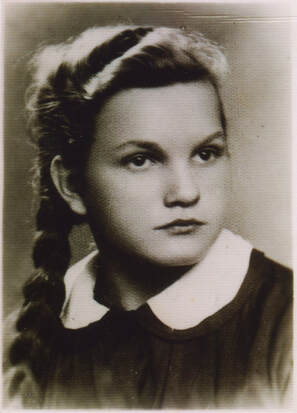 Image from the private archive of Wanda Traczyk - Stawska "I ran out with this dog in my arms to see where this bomb hit, to possibly cry out for people's help," Wanda said. "I saw a woman running out of the rubble of a building with an infant...I saw the Germans shooting this woman, aiming at this infant. I saw this child fall apart."
"And I was also at that time, first witnessing them throwing out of the house where we lived, my friend a Jew, I saw how they yanked her grandfather, how they pushed him, because he did not know what was going on, did not understand anything, cried, a terrible scene. Then my attitude towards the Germans was unequivocal." Not much later the Germans came and booted Wanda's family out of their apartment. She has spunk even at 12. "He pushed me, this officer, because I wasn't very polite," Wanda said. Over the weekend, friends, family and fans of Anne Feeney gathered virtually to remember the fierce and unflagging protest singer who promised to "comfort the afflicted and afflict the comfortable." Utah Phillips called her “the best labor singer in North America." She was that, and so much more. Two-time cancer survivor Anne Feeney fell to the coronavirus in February at age 69. Saturday, her life and legacy will be celebrated virtually on Zoom and Facebook Live. I got to meet Anne several times in her hometown of Pittsburgh, PA, when I traveled there to promote Fannie Never Flinched. She wrote a ballad about Fannie Sellins' life long before I wrote my book. She Called Herself a Hellraiser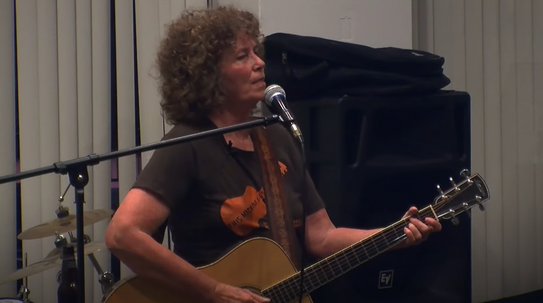 Anne Feeney was much, much, more. At Anne's memorial Saturday, her daughter's words are those that most deeply touched me .
"My mama, Anne Feeney may not have taught me how to paint my nails or curl my hair, but she certainly taught me how to be a strong woman. She taught me to be sure I am treated equally and to treat others the same. "She taught me to protect and encourage other women. She taught me to stand together with those who are struggling. She taught me that if one person is being treated unfairly, we are all being treated unfairly." ~Amy Sue Berlin Anne's music carried a message of solidarity to working people, and put corporations and politicians on notice. She sang for steelworkers, carwash employees, miners, strawberry pickers, railroad crews, anti-sweatshop activists and homeowners fighting foreclosure. She sang at demonstrations for women's rights, the environment, human rights and lent her voice and a hand to people working to end poverty and racism. It's been a crazy month.
A divided nation, reeling from the pandemic, now hit with cruel storms from coast to coast. I support our new president, but politics is not going to solve our problems. We the people...have to step up. All of us little people, doing little everyday things, but with intention and courage like never before. Americans have done it before. Take, for example, Mary Richards Browser, an almost completely unknown black woman, who risked her life to become a spy in the Confederate White House, help free her people and preserve the union during the Civil War. There are few records to help us reconstruct the life of Mary Richards Browser, but there is evidence she worked as a spy in the very seat of the Confederate government, reporting secrets to the Union Army until fleeing for her life. No existing photos are known to picture Mary, though at least one floating around the internet is falsely reported to portray her. So up stepped a girl, who imagined how Mary Richards Browser might have looked, and posed for a portrait. This week we had a community conversation about race and policing in my city, Spokane, Washington. I have a couple take-aways. Our mayor and police chief are nice people. But as blacks on the panel spoke about the dangers of living-while-black in Spokane, city leaders spoke about what they've been doing to improve the situation and how, yes, they need to increase those efforts. 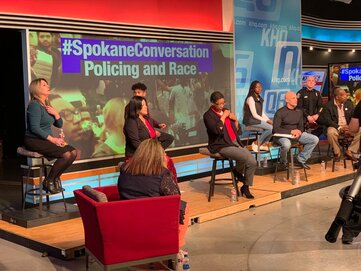 Photo courtesy KHQ News Photo courtesy KHQ News They showed no understanding of the need for structural change. They showed no understanding of white privilege. One point brought up several times by the local leader of the NAACP, is the need to understand our history. To create structural change and a just future, we need to be clear about our past. I jumped right on that. You know I believe this. That is a huge part of why I write this blog. One city that demonstrates this need to recognize that history matters and why structural change is needed: Tulsa, Oklahoma. If you've heard of the 1921 "race riot" in Tulsa, wipe your mind clear. It was a massacre. Human Rights Watch released a 66 page document this past week demanding reparations for survivors and descendants of those caught in the 48-hour reign of terror in Tulsa. Reign of Terror In segregated, Jim Crow Tulsa, the Greenwood district, known as "Little Africa" grew into one of the most economically vibrant black communities in the U.S. Thriving businesses lined its streets: banks, movie theaters, hotels, beauty shops, grocery stores, restaurants, as well as the offices of lawyers, realtors, doctors and other professionals. Known across across the country, as "Negro Wall Street", the entire 35-square blocks including more than 12-thousand homes burned to ashes in two days, May 31-June 1, 1921. An estimated 300 black people were killed. 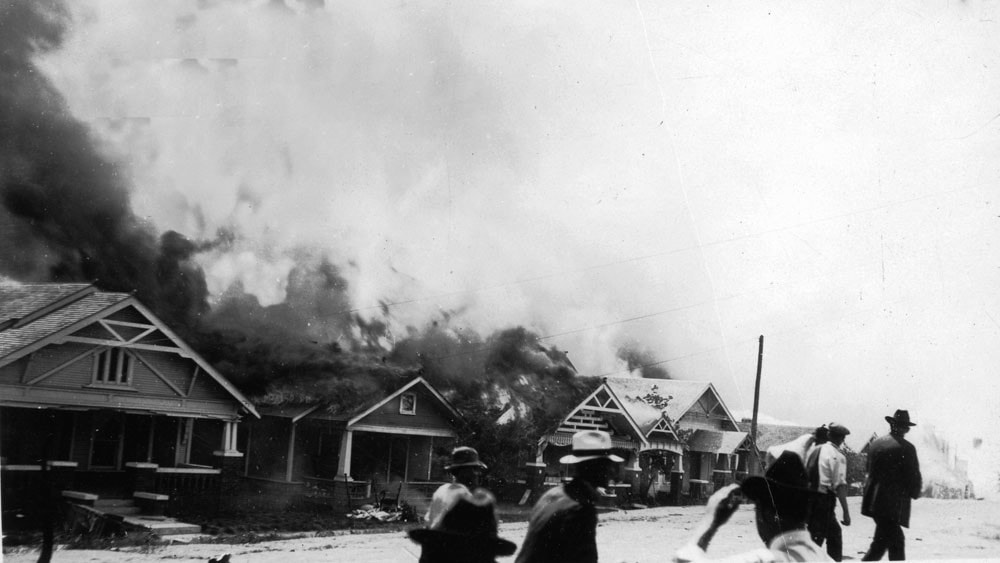 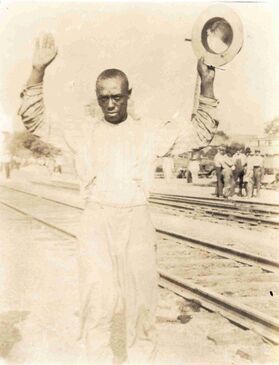 The murder and devastation was deliberate, sparked by accusations that a black man assaulted a white woman. According to witnesses, white mobs looted black homes and businesses before setting them ablaze. “They tried to kill all the black folks they could see,” survivor George Monroe, recalled. Law enforcement did nothing to stop the violence. In fact, witnesses say some officers participated in the looting and killing, including members of the Oklahoma National Guard. Survivors told of seeing black bodies dumped into the Arkansas River and disposed of in mass graves. “Many of the survivors mentioned bodies were stacked like cord wood,” says Richard Warner of the Tulsa Historical Society. 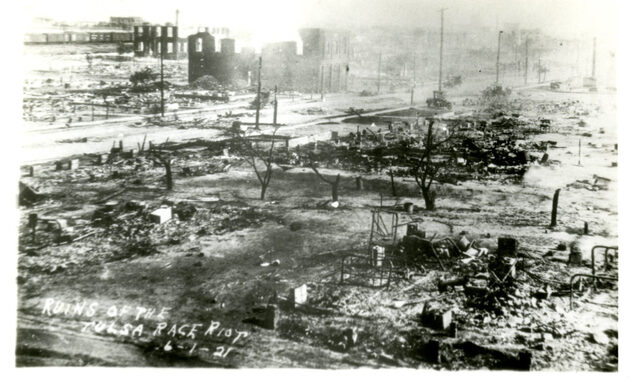 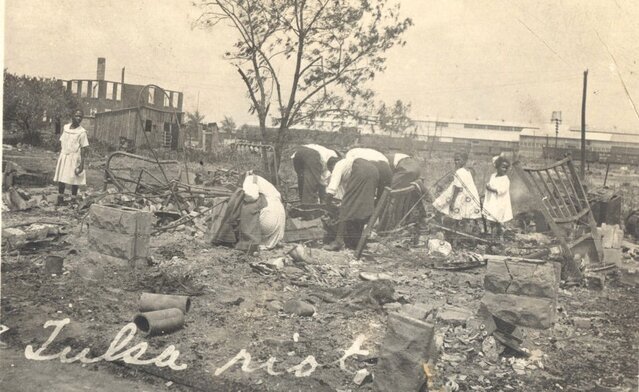 The fires left 10,000 homeless, subsisting in tents provided by the Red Cross. Incredibly, the black community of Greenwood regrouped, rebuilt, and restored their neighborhood by 1938. That despite the fact that insurance companies refused to compensate home owners and business for their losses. Not a single person was ever held responsible for the murders and property damage. White Tulsans chose to pretend it never happened, actively suppressing the truth. Even privately, they did not speak of it. Newspapers of the time grossly under-reported the death tally, claiming 36 blacks died. Textbooks omitted this history completely. Then after 77 years, evidence of the massacre started to surface. The Oklahoma Legislature appointed a commission to establish an historical record of the event. The commission brought in an expert to investigate possible sites where black bodies might have been buried. Clyde Snow liked to say bones make good witnesses, never forgetting and never lying. 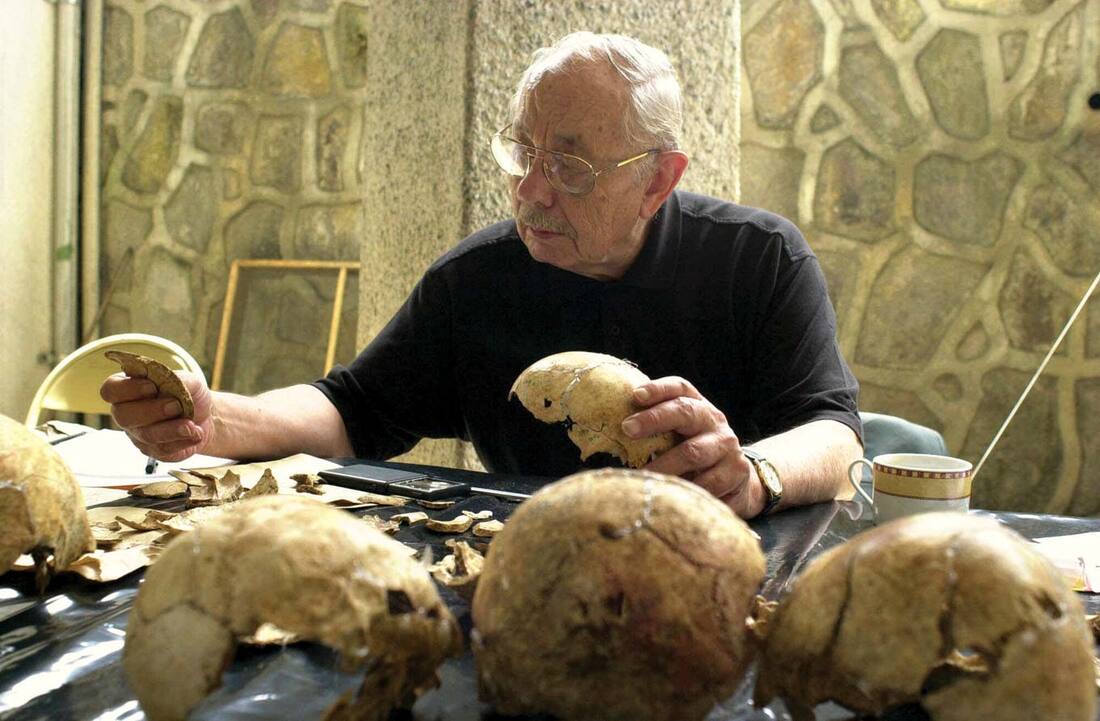 Dr. Snow in 2000 in El Salvador, where his team found the skeletons of 136 infants and children killed by army squads. Credit Victor Ruiz/Associated Press Before his death in 2014, Clyde Snow was one of the world's foremost forensic anthropologists. He helped identify the remains of Nazi war criminal Josef Mengele and confirmed the identification of President John F. Kennedy after his assassination. He aided in the determination that more than 200 victims found in a mass grave in Yugoslavia had been killed in an execution style of ethnic cleansing. In Tulsa, Snow investigated ground that had been a potters field in 1921. It was the suspected site of a mass grave where black bodies might have been buried after the massacre. Using ground-penetrating radar, the forensic anthropologist discovered an aberration in the earth, which the commission report stated "all the characteristics of a dug pit or trench with vertical walls and an undefined object within the approximate center of the feature." In addition, a witness came forward, a white man named Clyde Eddy who'd been 10 at the time of the massacre. Eddy remembered seeing men dig a trench and prepare to bury wooden crates containing remains of black victims. 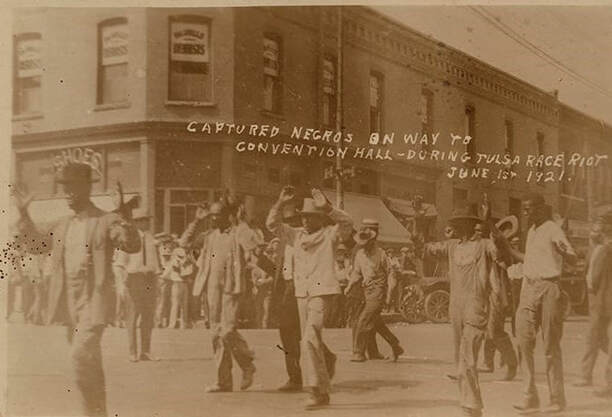 A digital scan of a postcard image of the Tulsa race riot shows black prisoners being marched at gunpoint, photo courtesy Tulsa Historical Society and Museum. Clyde Snow drew parallels between the violence in Tulsa and state-sponsored killings he investigated in other countries. The commission's evidence led him to believe the so-called Tulsa "riot" was an act of ethnic cleansing facilitated by the Oklahoma National Guard. In 2000, the Tulsa Race Riot Commission made a number of recommendations for moving forward, including further investigation of possible mass grave sites and cash reparations to survivors (149 were alive at the time) and descendants of those killed and of survivors. The only action taken was by the State of Oklahoma which issued survivors decorative medals. Now, twenty years later it's possible Tulsa can begin to address its racist history. This last December archaeologists discovered further evidence of possible mass graves at two sites in the city. Excavations were to have started in February, but have been postponed due to COVID-19. 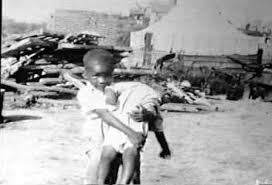 Child survivor of 1921 Tulsa Massacre Child survivor of 1921 Tulsa Massacre And coincidentally with nationwide "Black Lives Matter" protests, Human Rights Watch issued a news call for reparations for blacks in Tulsa. Human Rights Watch is a non-governmental organization that conducts research and advocacy on human rights around the world. “No one has ever been held responsible for these crimes, the impacts of which black Tulsans still feel today,” says the report, titled “The Case for Reparations in Tulsa, Oklahoma: A Human Rights Argument.” “Efforts to secure justice in the courts have failed due to the statute of limitations. Ongoing racial segregation, discriminatory policies, and structural racism have left black Tulsans, particularly those living in North Tulsa, with a lower quality of life and fewer opportunities.” The community has higher rates of poverty and police brutality. Black Tulsans are subjected to physical force by police — tasers, police dog bites, pepper spray, punches, and kicks — 2.7 times more than whites, according to Human Rights Watch. Today, the area once known as Black Wall Street is marked by a mural painted on the side of Interstate 244, which bisected the neighborhood in 1970. 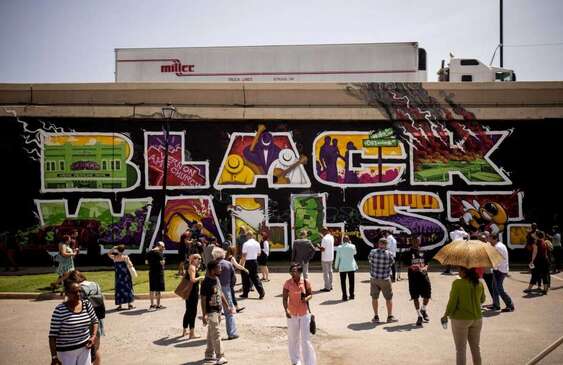 While traffic roars through on the interstate, gentrification creeps into Greenwood. There's a minor-league baseball stadium, an arts district marketed to millennials, and a high-end apartment complex with a yoga studio and pub. City Councilor Vanessa Hall-Harper says gentrification of the neighborhood is driven by the same greed that fed the fire of white violence 100 years ago. 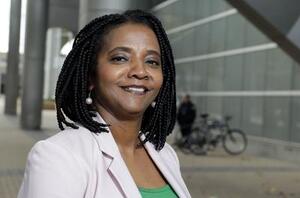 "There was economic jealously that caused them to destroy Greenwood...The stadium is like building a Whole Foods at the site of the Oklahoma City bombing." "This is sacred ground," Hall-Harper said. "As developers are making decisions about the Greenwood district, the history is being ignored, and I think it is intentional. They want to forget about it and move on." Not only forget, but whitewash. Near the baseball stadium's entrance, the mural is signed "Tulsa Race Riot 1921." Someone has crossed out "riot" and written "massacre." Someone else has crossed out "massacre" and left a scribble of black spray paint. 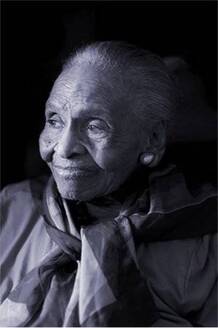 livia Hooker, the last known survivor of the 1921 racist attack in Tulsa, died two years ago at 103. She was six 6 when the violence erupted, but never forgot how her mother told her and her three siblings to hide under their dining room table. "She said, 'Keep quiet, and they won't know you are under here.' The [whites who came in her house] took everything they thought was valuable. They smashed everything they couldn't take," Hooker said. This past week, Oklahoma offered a panel discussion on race, facilitated by Governor Kevin Stitts and his wife. Black leaders criticized the governor for stacking the panel with folks who would not challenge him on his racial beliefs and biases, calling the event a "superficial show of solidarity." Two of the four panelists were law enforcement officers. There were no women, no Latinx or indigenous Oklahomans, no millennials, and no recognizable black activists or leaders from social justice groups.  Oklahoma Govenor Kevin Stitt convenes diversity panel At the panel in Spokane, the police chief made a point of saying his officers are good, caring people, and that George Floyd was killed in Minneapolis, not here.
What he fails to understand is that "good" isn't good enough. Being "not guilty" of killing a black man is not good enough. Claiming not to be a racist is not enough. That's why we're hearing the term anti-racist. Being anti-racist requires recognition of the privilege bestowed on us simply because we were born with white skin, reckoning with the fact that racism is systemic and taking action. We can't sit on one side of the scale of justice and expect it to level on it's own. We must involve ourselves intentionally in day-to-day efforts to dismantle the racist structures in our schools, our cities and our country. If not engaging, we are automatically, by default, perpetuating the problem. Sources: https://thislandpress.com/2011/06/11/what-lies-beneath/ https://abcnews.go.com/US/tulsa-marks-grim-anniversary-1921-race-massacre-protests/story?id=71010791 https://ktul.com/news/local/tulsas-dark-secret-the-mass-graves-of-the-1921-race-riot https://theblackwallsttimes.com/2020/06/08/bwstimes-gives-gov-kevin-stitt-2-out-of-10-on-race-conversation/ https://www.sapiens.org/news/tulsa-race-massacre/ https://www.hrw.org/news/2019/09/12/us-how-abusive-biased-policing-destroys-lives https://www.washingtonpost.com/local/tulsa-mayor-reopens-investigation-into-possible-mass-graves-from-1921-race-massacre/2018/10/02/df713c96-c68f-11e8-b2b5-79270f9cce17_story.html What if I told you there was a civil rights leader who mentored Rosa Parks years before the Montgomery Bus Boycott? Who spent the early 1940s in small towns across the south, calling on barber shops, beauty parlors, grocery stores, churches, talking with sharecroppers, talking about how black people could fight Jim Crow. And who convinced Dr. Martin Luther King, Jr. that blacks needed a civil rights base in the south like the NAACP in the north, but more activist. And urged an initially reluctant King, then a young minister, to capitalize on the momentum of the bus boycott and expand protest throughout the south. You are probably guessing this is a woman. And you would be right. 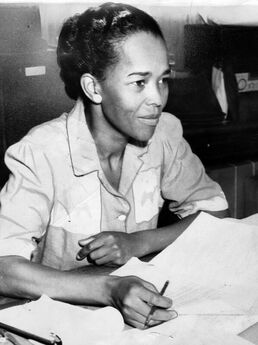 Ella Baker, Afro Newspapers, Gado/Getty, Sept. 18, 1941. Ella Baker, Afro Newspapers, Gado/Getty, Sept. 18, 1941. Ella J. Baker was known as a difficult woman. She didn't care. Working for the NAACP 1940-1946, she encountered men who doubted women's capabilities and who wanted to hold tight to their hierarchical structure and middle-class membership. Ella wanted to involve poor blacks and women, and she believed ordinary people could organize and lead themselves and change unjust structures in society. She also didn't care that her accomplishments went unnoticed. She worked behind the scenes helping people empower themselves, saying "Strong people don't need strong leaders.” In her years of grassroots work for the NAACP, Ella admitted the seemly endless small church meetings could often be “more exhausting than the immediate returns seem to warrant, but it’s a part of the spade work....Give light and people will find the way.” By 1946, Ella had become so fed up with the NAACP for it's resistance to grassroots organizing and lack of inclusion, she quit. Though she still participated in the local chapter where she lived in New York. Ella Baker, standing third from the right with a group of girls at a fair sponsored by the NAACP, early 1950s, courtesy New York Public Library. 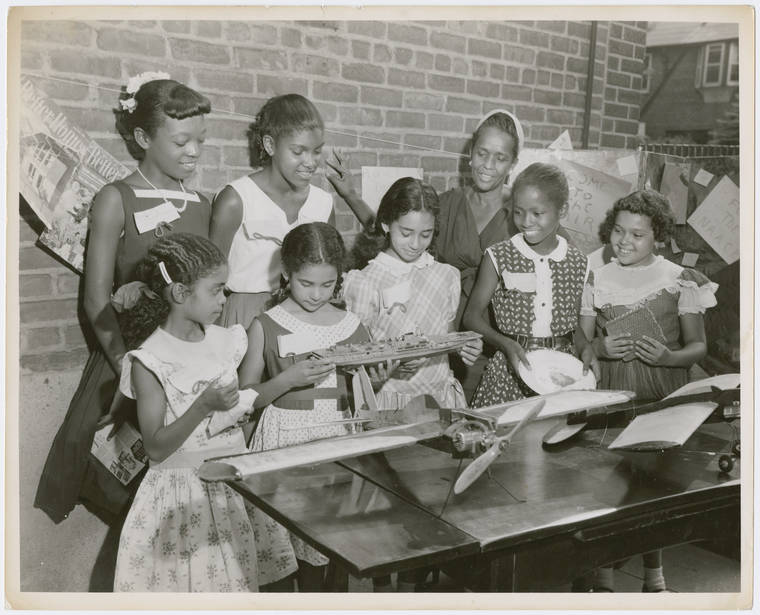 Courtesy New York Public Library After the Montgomery Bus Boycott, a group of sixty black ministers gathered for a conference and founded the Southern Christian Leadership Conference to coordinate civil rights protest activities across the South. It was Ella's idea. Not to sound like a school kid, arguing about who had an idea first, but leaving Ella out of the story of the SCLC is like forgetting you have a backbone. Dr. Martin Luther King, Jr. is lauded by everyone as the SCLC's first president. Google its founders and you'll find the names of Bayard Rustin, Ralph Abernathy, Fred Shuttlesworth and others. And others is Ella Baker. In 1960, when the Greensboro Four staged a sit-in at a Woolworth's lunch counter, Ella had served two years as SCLC Executive Director. She saw the energy and commitment of the students staging sit ins. She saw their potential and wanted to support them. 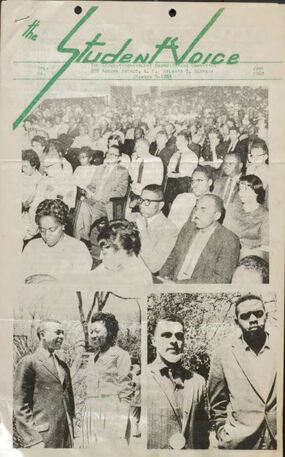 Student attendees at the conference show in the first issue pf SNCC's newspaper. Student attendees at the conference show in the first issue pf SNCC's newspaper. Within three months she organized a conference of hundreds of college students.“[I] felt there had to be some contact between the various student groups which had sprung up, or they might peter out of a lack of the nourishment of ideas and sustenance of morale that come from such contacts.” Diane Nash attended. “We felt a real kinship with the students who were working in other cities, to bring about the same things that we were.” Ella urged the students to see the sit-in movement as “bigger than a hamburger or even a giant-sized coke....[But as a movement to scourge America] “of racial segregation and discrimination – not only at lunch counters, but in every aspect of life.” From this gathering of students sprouted the Student Nonviolent Coordinating Committee, SNCC, pronounced "Snick." Built from the bottom up, SNCC turned the tide of the Civil Rights Movement to direct action. To protests, sit-ins, the Freedom Rides against segregation, the 1963 March on Washington and Freedom Summer voting registration drives in Mississippi. Martin Luther King had wanted the students to become become an arm of the SCLS, but Baker urged them to form their own group, and to include women and the poor. She clashed with King, pushing for more voices to be heard, and for more people to be empowered. "To be very honest, the movement made Martin rather than Martin making the movement." Ella said once. "This is not a discredit to him. This is, to me, as it should be." Scholar Cornel West says Ella was like a jazz musician. "She's antiphonal, call and response, she's in conversation. She's not pontificating from above, she's having conversation on a horizontal level." 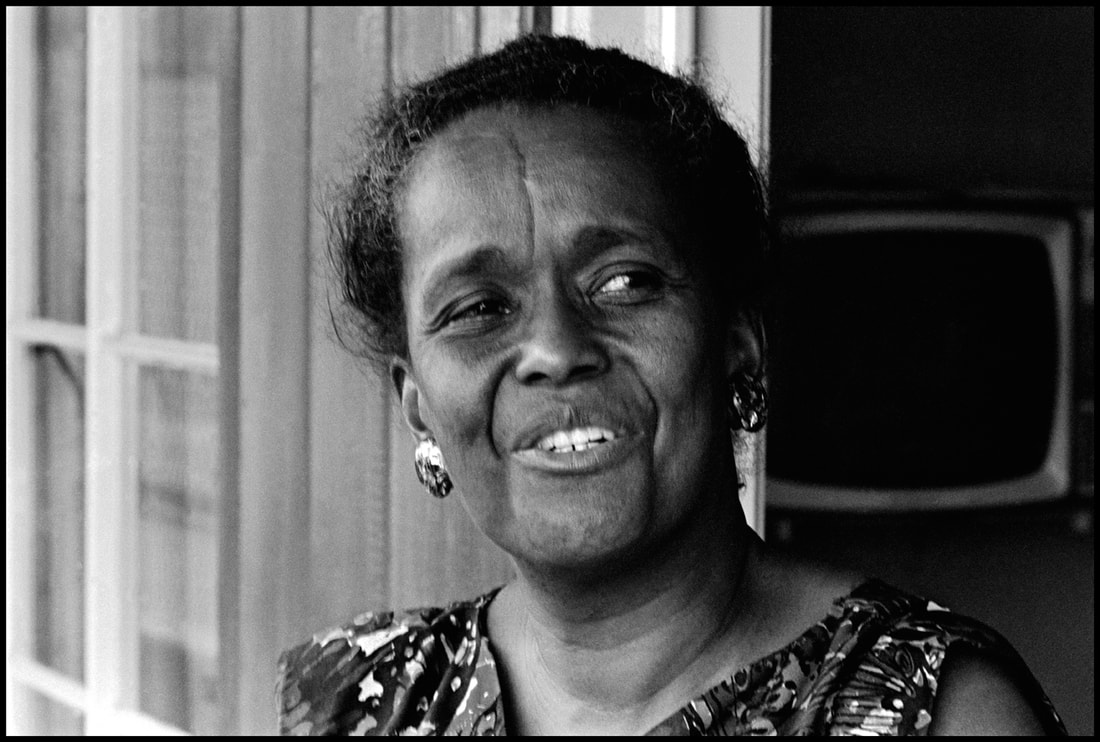 ©Danny Lyon / Magnum Photos “I wasn’t one to say yes, just because [an idea] came from Dr. Martin Luther King, Jr. I was not an easy pushover," Ella said. "It’s a strange thing about men,… if they haven’t ever had a woman say no to them, they don’t know what to do sometimes.” Andrew Young articulated the feelings of the male leaders about Ella Baker. "The Baptist church had no tradition of women in independent leadership roles, and the result was dissatisfaction all around." Ella resigned from the Southern Leadership Council to work with the SNCC young people, shock troops in the battle for equal rights. 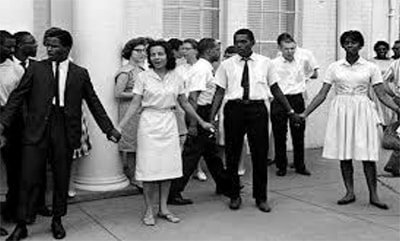 Diane Nash singing with demonstrators in front of a Nashville police station, photo courtesy The Nashville Tennessean. “The young people were the hope of any movement…They were the people who kept the spirit going," Ella said, "the average Baptist minister didn’t really know organization.” Perhaps the influence of Ella's enslaved grandmother helped her speak up and believe in fighting for equality. Her grandmother was offspring of a slave and master. And because of that, the day after her birth the jealous mistress of the plantation poisoned the newborn's mother. Ella listened to her grandmother's stories of resilience and bravery, of being raised in slave quarters and put to work in the big house. "But at the point at which she was of marriageable age...the mistress wanted to have her married to a man whom we knew as Uncle Carter. He was also light. And she didn't like Carter. And so when she refused to concur with the wishes of the mistress, the mistress ordered her whipped, but the master, who was still her father, refused to have her whipped." Instead of the whipping, Ella's grandmother was forced to plow in the fields. When plowing began each year February, it was so cold she'd have to stop work to warm her hands on the horse's belly. Ella said, "I've heard her say that she would plow all day and dance all night. She was defiant." The SNCC flourished with Ella Baker's guidance and encouragement. It grew quickly in the fertile soil of all that spade-turning Ella had done in the 1940s. Diane Nash, (in photo) explained how Ella inspired her. “I could count on Miss Baker being truthful and she would explain many things very honestly to me, and I would leave her feeling emotionally picked up dusted off and ready to go.” Another young woman who was there at the founding of SNCC, Bernice Johnson Reagon, took Ella's words and set them to music. Struggling myself don’t mean a whole lot I come to realize. That teaching others to stand up and fight is the only way my struggle survive The anthem of freedom, Ella's Song, recorded by "Sweet Hone In The Rock" still rings true today. We who believe in Freedom cannot rest until it comes Until the killing of Black men, Black mothers’ sons Is as important as the killing of White men, White mothers’ sons. People called Ella Baker by the nickname Fundi, a Swahili word for someone who teaches a craft to the next generation. She continued to work for civil rights until her death on her 83rd birthday in 1986.
The more recent civil rights groups Occupy and Black Lives Matter Global Network embrace Baker's organizational ideals. Both have been criticized for their lack of leadership. Patrisse Khan-Cullors, one of the founders of Black Lives Matter responded by saying, "We are not a leaderless movement, we are a leaderfull movement." We shortchange ourselves when we overlook the leadership of Ella Baker. Yes, because she is an example of a powerful black woman, and a woman who maneuvered her way through gender stereotypes, but also because the work of her life demonstrates that successful enterprises need various kinds of leadership, that investing in a charismatic leader without cultivating a leadership base may jeopardize the cause. Tell me what you think! Did you know all this about Ella Baker? Leave your comment below. I'm sure glad I stumbled on her name and dug deeper. It gives me pause now, to think how often I've longed for a charismatic leader to pull Americans together to work for justice, and to take climate change seriously. Sources: https://www.smithsonianmag.com/history/long-lasting-legacy-great-migration-180960118/ https://snccdigital.org/people/ella-baker/ https://ellabakercenter.org/about/who-was-ella-baker https://kinginstitute.stanford.edu/encyclopedia/baker-ella-josephine https://ncwomenofcivilrights.wordpress.com/ella-baker/the-sclc-and-the-birth-of-sncc/ |

I'm fascinated to discover little-known history, stories of people and events that provide a new perspective on why and how things happened, new voices that haven't been heard, insight into how the past brought us here today, and how it might guide us to a better future.
I also post here about my books and feature other authors and their books on compelling and important historical topics. Occasionally, I share what makes me happy, pictures of my garden, recipes I've made, events I've attended, people I've met. I'm always happy to hear from readers in the blog comments, by email or social media. Archives
September 2023
Categories
All
|