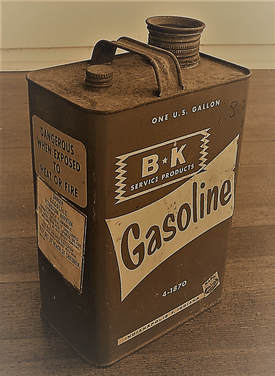
 When you hear the call: "Build the wall" take a moment and tell someone about Carmellita Torres. This 17-year-old girl sparked a protest on the Juarez/El Paso border in 1917 when customs officials ordered her to undress and submit to being doused with gasoline. The kind of guys in charge back then were the same kind of guys we have in charge now. So, unfortunately, Carmellita's courageous action did not bring change. But women's voices are being heard today, in way they never have been before. Carmellita Torres freely crossed the border from Mexico almost every day to work as a maid for an American family. She wasn't alone. Farmers and ranchers in the Southwest were completely dependent on Mexican labor. White families in El Paso could easily afford the wages they paid Mexican girls and women to do their cleaning and laundry. So many Mexicans from Juarez came to El Paso every day for work that a trolley was set up for them to ride across the Santa Fe Bridge between the two cities. 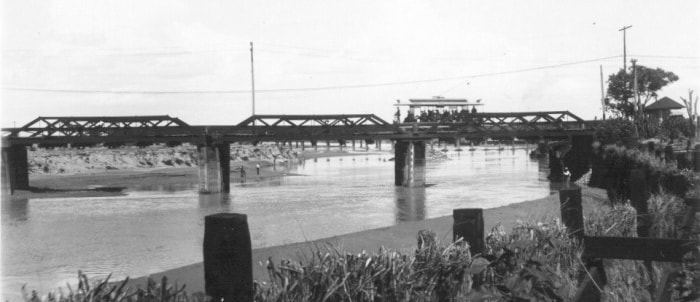 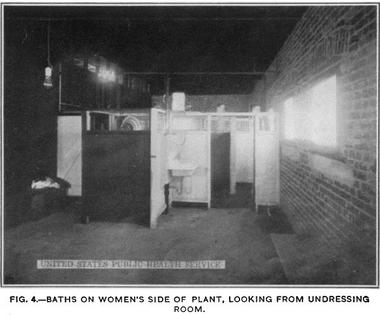 But El Paso Mayor Tom Lea, Jr. feared Carmellita and the other workers, whom he called "dirty, lousy, destitute," would carry lice and cause a typhus epidemic in his city. Rates of typhus infection were no higher in El Paso, than they were in other large American cities. But in January 1917, Mexicans were suddenly required to show a certificate to cross the border, a certificate indicating that "the bearer, ___ has been this day deloused, bathed, vaccinated, clothing and baggage disinfected.” Carmellita and the others were forced to strip nude for inspection, bathe, and be drenched in gasoline to kill any lice that might be on their bodies. Their clothing and shoes were fumigated and put through a steam dryer. The women were subjected to lewd comments and there were rumors that nude photographs of them were showing up in nearby bars. Sunday morning, January 28th, 1917, Carmellita reached the end of her trolley ride and was told to get off, take a bath and be disinfected. She refused. Carmellita convinced thirty other women on the trolley to refuse as well. By 8AM the crowd of protesters, mostly servant girls, grew to 200 and packed half the bridge. Some of the women stopped the trolley by laying down on the tracks. By noon some 2000 people stood with Carmellita. 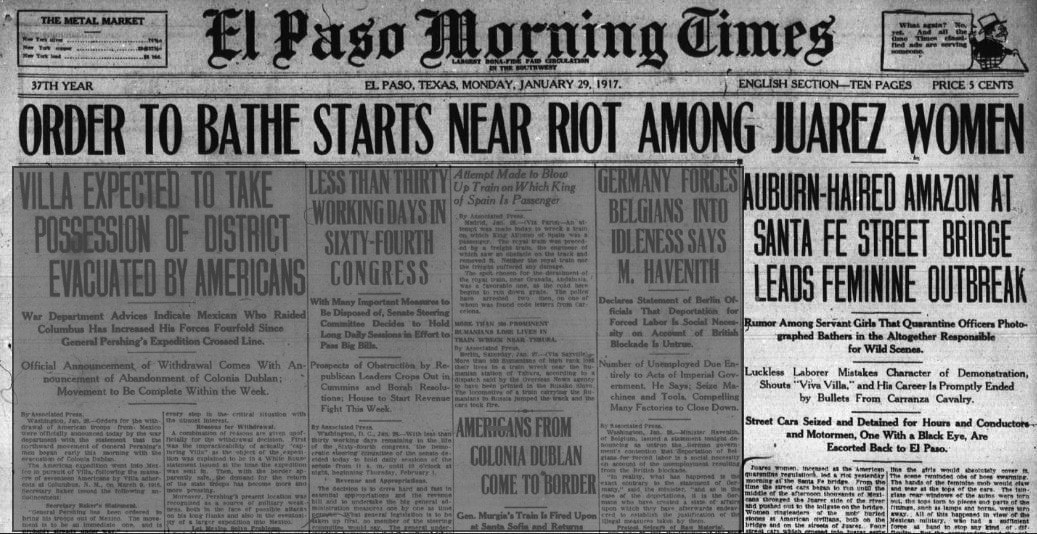 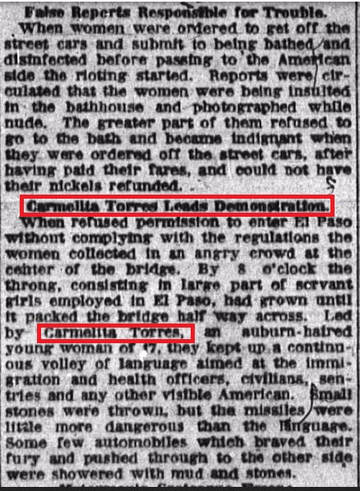 Both Mexican and American soldiers showed up to subdue the crowd, and Monday morning it was back to fumigation as usual. There's little trace of Carmellita Torres in the pages of history. She's named in the newspaper for leading what came to be called "the bath house riots," and we know that she and eight other women were arrested and went to jail for "inciting riot" that day. Their stories may have been passed down the years orally, but the white men writing the newspapers and making the rules preserved a different story. The reporter for the El Paso Morning Times wrote that once Mexicans got familiar with the bathing process, they would welcome it. He said the Mexicans "came out [of the bath house] with clothes wrinkled from the steam sterilizer, hair wet and faces shining, generally laughing and in good humor." Raul Delgado, a man who went through the "cleansing" gave his description decades later. “An immigration agent with a fumigation pump would spray our whole body with insecticide, especially our rear and our partes nobles. Some of us ran away from the spray and began to cough. Some even vomited from the stench of those chemical pesticides…the agent would laugh at the grimacing faces we would make. He had a gas mask on, but we didn’t." 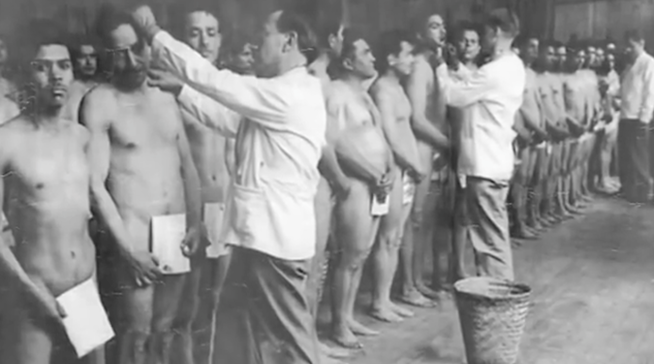 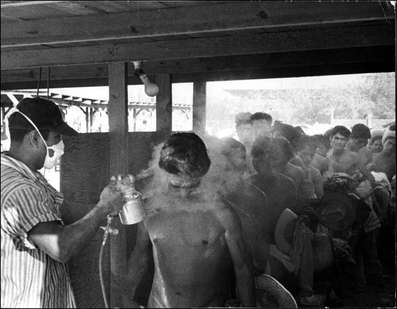 Bracero workers, hired for seasonal farm work, are sprayed with DDT after crossing the U.S.-Mexico border in 1956. (Smithsonian Institution) Bracero workers, hired for seasonal farm work, are sprayed with DDT after crossing the U.S.-Mexico border in 1956. (Smithsonian Institution) The risk of typhus has been used by both American and German leaders to whip up fear and prejudice against a segment of the population they wanted to deem inferior. The notion that Mexicans crossing into the U.S. for work each day would carry lice and cause a typhus epidemic, was used as an excuse to spray them with toxic chemicals. Men, women and children crossing the Juarez/El Paso border were doused or sprayed with chemicals like gasoline and DDT for more than 40-years. In Poland, the Nazis posted placards around Warsaw in 1940 declaring that Jewish people were infested with lice and carrying typhus. To protect the rest of the populace all Jews were required to move into a small section of the city that became the Warsaw Ghetto. 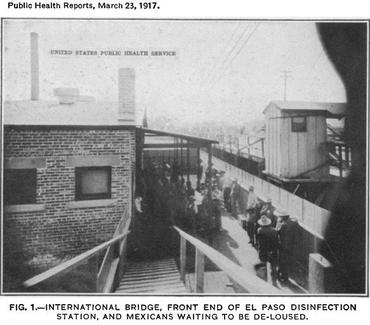 Author David Dorado Romo heard stories of fumigation from his aunt who had experienced it. When he started researching the subject at the National Archives, he discovered there was a lot more to the story and wrote about it in his book Ringside Seat to a Revolution: An Underground Cultural History of El Paso and Juarez, 1893-1923. "These records point to the connection between the U.S. Customs disinfection facilities in El Paso-Juárez in the 20s and the Desinfektionskammern (disinfection chambers) in Nazi Germany...." I discovered an article written in a German scientific journal written in 1938, which specifically praised the El Paso method of fumigating Mexican immigrants with Zyklon B," writes Romo. In 1939, the Nazis started using Zyklon B to fumigate people at border crossings and concentration camps. Later, they used Zyklon B pellets in the gas chambers at Auschwitz and other camps, not to kill lice, but people. 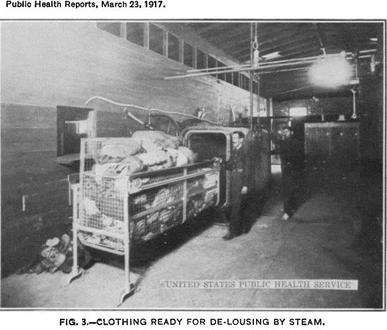 In 1917, after Carmellita's protest, the US/Mexican border was closed for the first time, customs officials
prohibiting anyone from crossing without authorization. That is, without the required fumigation of their clothing, shoes and body. That year alone, 127,000 people suffered humiliation and were doused with toxic disinfectant at the El Paso end of the Santa Fe Bridge. This federal policy would promulgate a stereotypical negative view of Mexicans and their American descendants for decades to come. U.S. Public Health Service photos thanks to https://elpasogasbaths.weebly.com/ 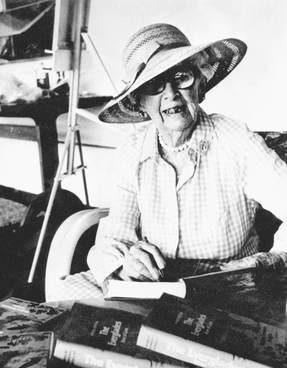 Marjory Stoneman Douglas earned her place in history for helping preserve the Florida Everglades. She did it all in the second half of life. At first glance Marjory appears an unlikely heroine. She began her journalism career as the society reporter for the Miami Herald and later published short stories and novels. She rarely went out for a picnic, let alone visited the crocodile invested Everglades, saying it was "too buggy, too wet, and too generally inhospitable....I know it’s out there, and I know it’s important.... There are no other Everglades in the world." South Florida land developers considered the Everglades a useless swamp just waiting for them to turn it into shopping malls and subdivision. 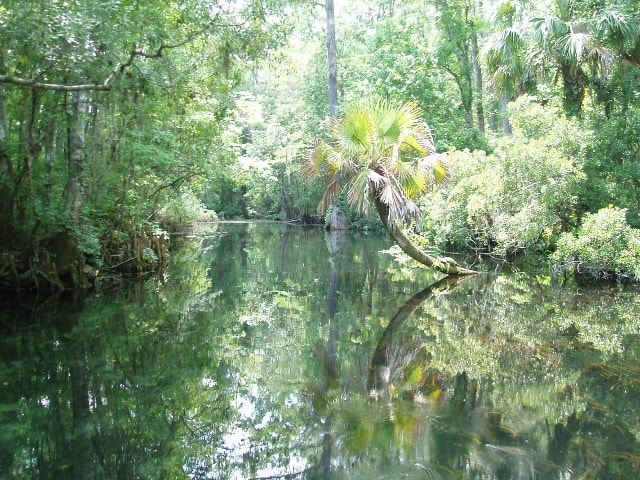 Marjory wrote stories set in South Florida and vividly described the natural world. She was writing a novel 1941 when an editor asked her to write a non-fiction book addressing threats to the Everglades and she agreed. Scientists warned if the area wasn't protected, soon all wildlife there would be extinct.  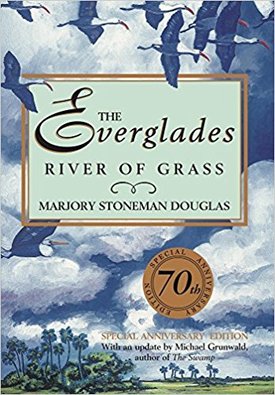 They are unique...in the simplicity, the diversity, the related harmony of the forms of life they enclose," wrote Marjory. "The miracle of the light pours over the green and brown expanse of saw grass and of water, shining and slow-moving below, the grass and water that is the meaning and the central fact of the Everglades of Florida." At age 57, Marjory published The Everglades: River of Grass. It hit the shelves in November 1947 and sold out before Christmas. The impact of the book is sometimes compared to Rachel Carson's Silent Spring. And it launched Marjory into her role as an environmental activist, which took up the next 51-years of her life. She founded Friends of the Everglades, wrote more books on the subject and fought developers, the Army Corp of Engineers, and anyone else who threatened the unique species and habitat of South Florida. "[She's a] tiny, slim, perfectly dressed, utterly ferocious grande dame who can make a redneck shake in his boots," said Assistant Secretary of the Interior Nathaniel Reed. "When Marjory bites you, you bleed." 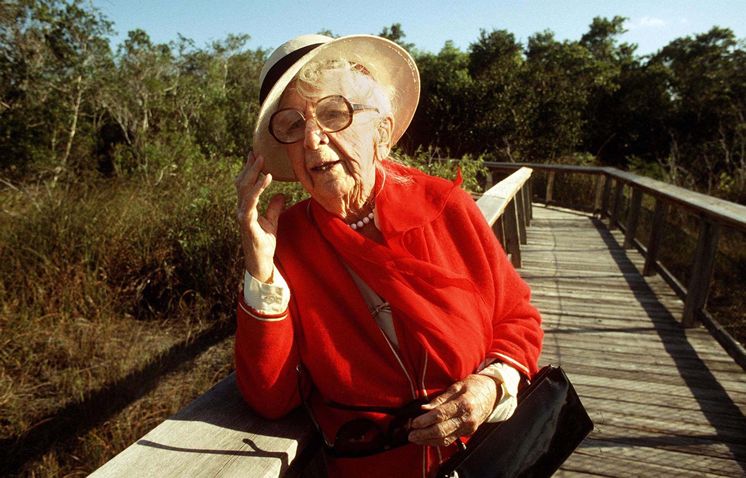 Marjory's wisdom is crucial today as we face climate change. She said. "I would be very sad if I had not fought. I'd have a guilty conscience if I had been here and watched all this happen to the environment and not been on the right side."
In 1990, Marjory published her autobiography, Voice of the River beginning with the admission "the hardest thing is to tell the truth about oneself." And ending with the advice, "life should be lived so vividly and so intensely that thoughts of another life, or a longer life, are not necessary." Marjory lived “my own life in my own way,” for 108 years. Her spirit gives me hope and challenges me live vividly and intensely. Second grader LaVaun Smith heard a great uproar outside her school in southeast Kansas. She and the other students rushed to the door of their country school house to see the commotion. They threw open the door that cold December day in 1921, and a rowdy parade of women filled the road beating on dish pans, wash pans and metal buckets with sticks and kitchen utensils. A number of the students spotted their mothers as the women converged on the mine across the road to confront strike-breakers, who had taken their husbands' coal mining jobs. 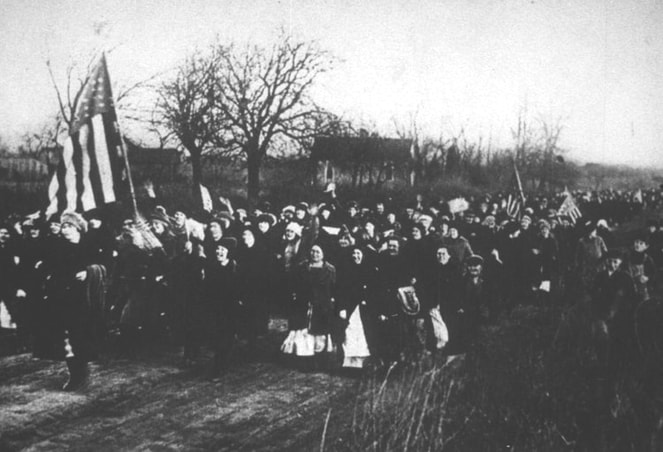 The school kids' dads had struck the mines in Crawford and Cherokee County three months prior, but companies kept operations running with non-union workers, and the sheriff arrested labor leaders for violating a statewide strike injunction. With a harsh winter on the horizen coming, wives, mothers, and sisters of the mine workers decided to take things into their own hands. Gathering before dawn, December 12, they marched through the region, routing "scabs" at 63 different mines. No fear One marcher recorded in her diary, the women “rolled down to the [mine] pits like balls and the men ran like deers....There was absolutely no fear in these women’s hearts.” The throng of marching women, some pregnant and others carrying small children, grew from two-thousand to possibly six-thousand. For three days they completely shut down coal production in the region. 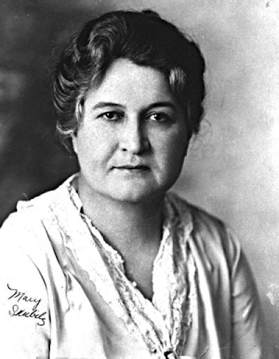 One of the leaders, Mary Skubitz, had immigrated from Slovenia as a child. According to her son Joe, "Hunger drove most of those women. They just wanted something to eat and a house." Mary spoke German, Italian, and Slovene, which allowed her to rally a broad spectrum of women in the mining camps. Fluent in English as well, she was persuasive with the mine bosses and strikebreakers. Kansas Governor Henry Allen dispatched four companies of the Kansas National Guard, including a machine gun division to get the women back to their kitchens. The women, armed only with their pots, pans and red pepper spray, marched from mine to mine singing hymns and waving American flags. 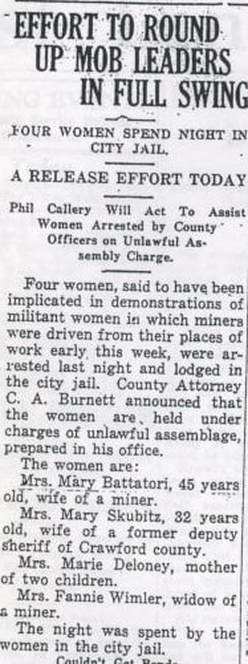 The first day there was little violence, but the following two days when large numbers of men joined the protest, strikebreakers were beaten and property vandalized, inflaming headlines across the nation. The New York Times declared them an Amazon Army...on the warpath...invading mines and scattering workers with pepper spray. December 16, Sheriff Milt Gould arrested Mary and three other women, who spent one night in jail due a $750 bail. Over the following month, the sheriff and his deputies hoped to make massive arrests, bystanders would not cooperate in naming names, and women protesters told deputies they could not recall who had marched beside them. Deputies jailed 50-some men and women who participated in the action. And Crawford County District Judge Andrew Curran handed down fines to forty-nine protesters for disturbing the peace, unlawful assembly, and assault. The marching women were characterized by the newspapers in one of two ways. Benjamin W. Goossen write in Kansas History: A Journal of the Central Plains (Autumn 2011), "either it was a laughable “Petticoat March” of witless and misguided domestics, or the attack of a ferocious 'Amazon Army' that threatened to destroy traditional notions of women’s role in society." 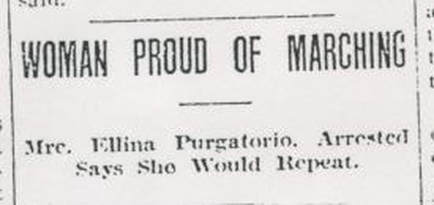 The Wichita Beacon described them as “a few women, peeking from behind windows, sometimes waving handkerchiefs and sometimes ‘making eyes’ at the soldiers."
The Kansas City Kansan labed them “women terrorists,” who “clawed and used teeth” like “tigresses.” Some of the women defended themselves in letters to the editors, and small groups of women continued to accost strikebreakers even after the strike was called off. The following election season, (this was just two years after American women got the vote) the women who had tested their strength marching turned their energy to campaigning against the men who'd opposed them. Both Sheriff Gould, who had arrested dozens of marchers and Judge Curran, who had sentenced them were ousted from office. 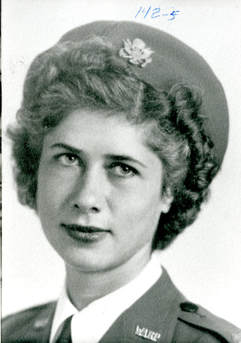 Courtesy WASP Archives, Texas Women's University Library. Courtesy WASP Archives, Texas Women's University Library. Author Jim Ure was writing a novel when a true story side-tracked him, the story of a woman's disappearance that has remained unsolved for more than seventy years. His new book, Seized by the Sun tells how Gertrude Tompkins (left), a shy, awkward girl who stuttered, growing up to be one of only a handful of U.S. women test pilots during WWII. Her job was to take new or repaired planes to the sky and put them through tight turns, stalls, dives and spins making sure they were safe. Below: P-51 Mustang fighters. Gertrude was one of only 126 WASP pilots good enough to fly these fighter planes. Her first flight in a powerful P-51 cured the debilitating stutter that had plagued her since childhood. 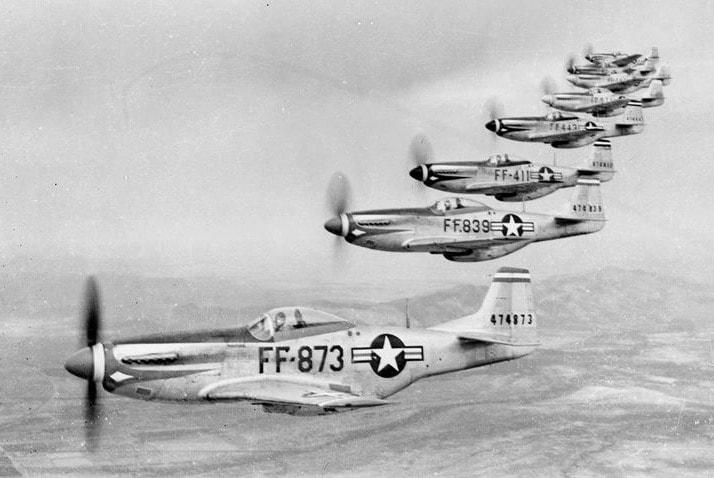 It was later in the war, on a routine flight, that Gertrude disappeared while ferrying a factory-new plane a short distance between two airfields in California Author James Ure is on the blog today, telling us how he got hooked on the story. 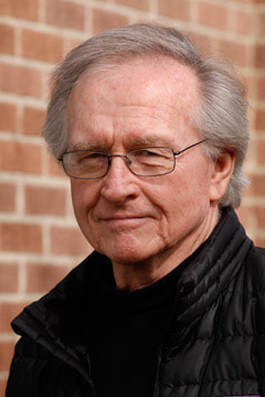 Author Jim Ure Author Jim Ure In the summer of the 2000 I was doing some research for an idea I had about a novel. My writing success had come in non-fiction, but the illusive novel still beckoned. In this fictional piece I imagined a character who learned his mother had been a woman pilot in World War II and her crashed plane and her remains had just been discovered in a melting glacier in Montana. I put a note on what I was doing on a Women’s Air Force Pilot user group on Yahoo. The result was unexpected. I was contacted by the grand niece of Gertrude “Tommy” Tompkins. Laura Whittall-Scherfee, who lives near Sacramento, told me that of the 38 women killed in the WASP during World War II, her grand aunt was the only one still missing. She was called, “The Other Amelia,” and a sort of cult had grown among the searchers who continue to look for her to this day. Laura and her husband Ken offered me access to the family records. Would I be interested? Would I ever! 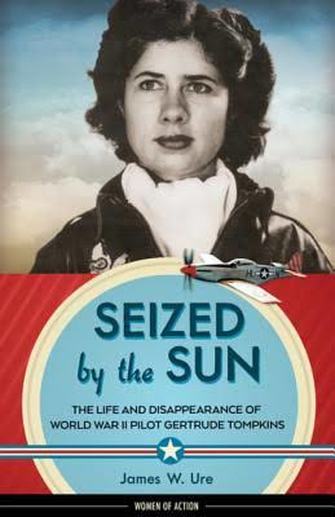 I’d always had a fascination for World War II aviation, and this was an enticement I couldn’t refuse. It took seventeen years of interviews, combing military files and reading private correspondence to finally give Tommy the fully-dimensional place in aviation history she deserved. I was lucky to have conversations with a number of WASPs early in my research. Today only about 85 WASPs of the 1,175 who were in service during the war are still alive. Tommy took off from Mines Air Field (now LAX) on October 26, 1944, and was expected to stay at the Army Air Force Base in Palm Springs that evening. She was never seen again. Aircraft historian Pat Macha has conducted numerous searches over the years and no trace has ever turned up. Below: A group of WASPs pray for luck before climbing into a BT-13 unpredictable and sometimes dangerous training plane. Avenger Field, Sweetwater, Texas, circa 1943. 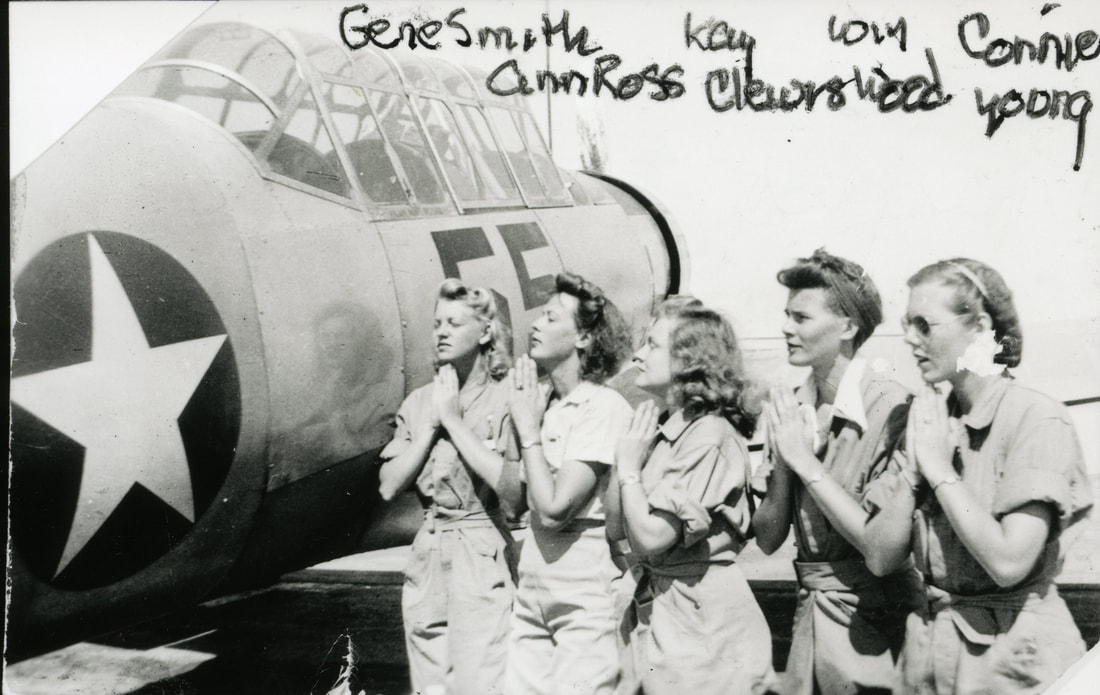 Courtesy WASP Archives, Texas Women's University Library. The conclusion I have come to after all this time is that she probably crashed into Santa Monica Bay immediately after take-off. The results of searches of the bay and of the mountains and deserts on her presumed flight path are documented in Seized by the Sun. It’s a mystery yet to be solved, and there are men and women still searching for Tommy. Thank you, Jim! Learn more about Jim and his books at www.jimurebooks.com. 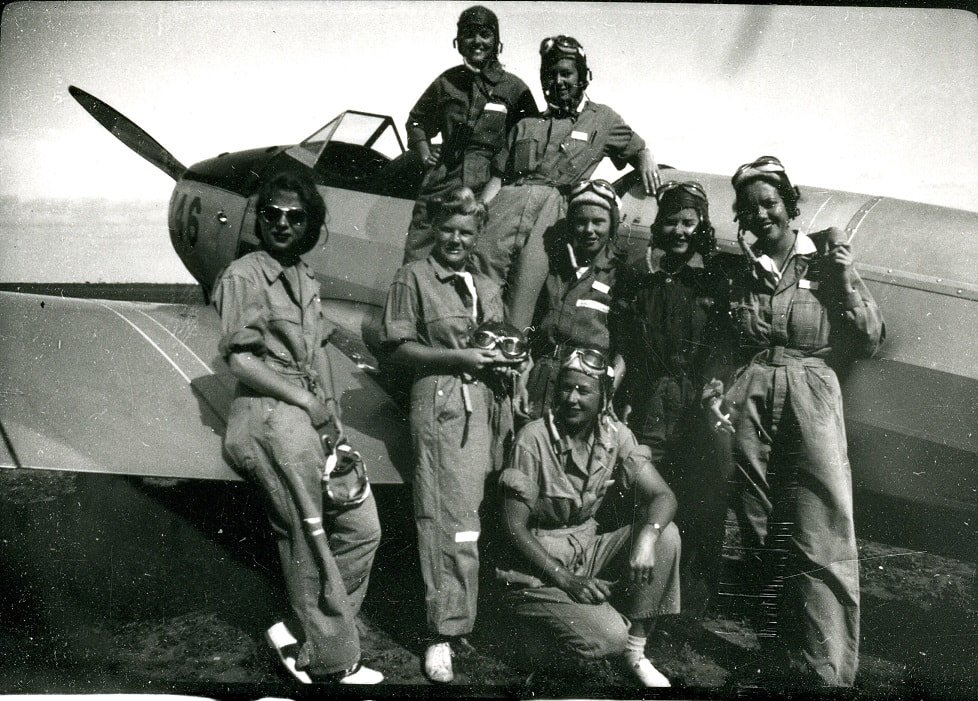 Above, WASPs with PT-19, the first plane usually flown in primary training. Women on far left in dark glasses is Gertrude “Tommy” Tompkins, according to Texas Women’s University Libraries WASP Archives.
This week, welcome Author Susan Latta with the story of one trailblazing nurse featured in her new book Bold Women of Medicine: 21 Stories of Astounding Discoveries, Daring Surgeries, and Healing Breakthroughs. 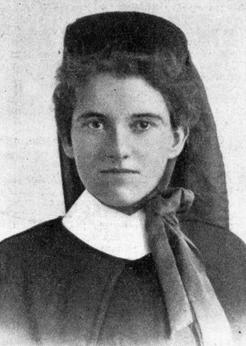 Nurse Elizabeth Kenny, circa 1915, courtesy Wikipedia commons Nurse Elizabeth Kenny, circa 1915, courtesy Wikipedia commons Thank you, Susan! No one knows whether Elizabeth Kenny had any formal medical training or learned on-the-job, but that didn’t stop her. She had a red cape and nurse’s jumper made and traveled through Australia’s wild bush land to serve anyone who needed help. Born in Australia in 1880, at a time when girls were not to be brassy, stubborn, or opinionated. Elizabeth had no intention of following those rules. I first heard about Elizabeth Kenny when my father had a stroke and was transferred to the Elizabeth Kenny Institute in Minneapolis for recovery. Prior to that, I knew of her in name only.  Author Susan Latta Author Susan Latta I remember standing in a long line in the school gym waiting to receive my vaccination in the early 1960s, and had no idea how many people suffered after being stricken by polio. Decades earlier Elizabeth Kenny had become famous for her treatment for polio, a dreadful virus that caused paralysis and death. Below: Elisabeth Kenny demonstrating polio treatment to doctors and nurses at the Elizabeth Kenny Institute in Minneapolis, Minnesota, 1943. Library of Congress photo 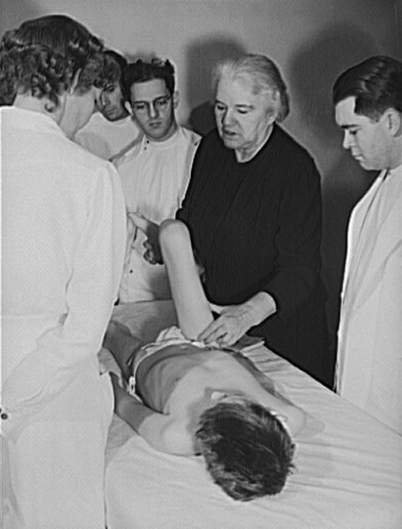 Elizabeth didn’t know it at the time but discovered her polio treatment one day in 1911. A frantic farmer called for help for his two-year-old daughter. Amy's arms and legs were twisted tight with unbearable pain. Elizabeth Kenny galloped away to send a telegram to her trusted doctor, Aeneas McDonnell. When he replied that it was polio, he said there was nothing to be done, and to do “the best with symptoms presenting themselves.” "I knew the relaxing power of heat," Elizabeth said. "I filled a frying pan with salt, placed it over the fire, then poured it into a bag and applied it to the leg that was giving the most pain. After an anxious wait, I saw no relief followed the application. I then prepared a linseed meal poultice, but the weight of this seemed only to increase the pain. "At last I tore a blanket made from soft Australian wool into suitable strips and wrung them out in boiling water. These I wrapped gently about the poor tortured muscles. The whimpering of the child ceased almost immediately, and after a few more applications her eyes closed slowly and she fell asleep.” Amy recovered. But men in the medical field refused to accept Elizabeth's methods.  In 1914, Elizabeth Kenny traveled to England to serve in WWI. The Australian Army Nursing Service gave her the title of “sister,” which had nothing to do with religion, instead meaning “senior nurse.” She became known as Sister Kenny. After the war, she presented her methods to control the muscle spasms and re-educate the paralyzed limbs to packed rooms of medical men in Australia. Over and over they called her a quack nurse from the bush, and finally she had had enough. She sailed to America to prove her treatment. After being turned away by doctors in New York and Chicago, she landed in Minnesota where a few doctors said her treatment did work. 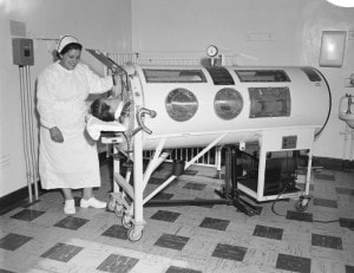 As word spread she gained nationwide support, even landing on a list of most admired women in America nine years running. The Elizabeth Kenny Institute opened in 1942, and still exists today as Courage Kenny, a facility for stroke and accident victims.
At right: A patient is treated in an Iron Lung circa 1960s. Photo courtesy U.S. Centers for Disease Control and Prevention Polio was eradicated in America when Albert Sabin’s live polio virus vaccine guaranteed immunity, just a few short years after Sister Kenny died in 1952. Thank you, Susan! I'm excited to learn about the other ground-breaking medical women featured in your book, Bold Women of Medicine: 21 Stories of Astounding Discoveries, Daring Surgeries, and Healing Breakthroughs. See more about the book and Author Susan Latta here... |

I'm fascinated to discover little-known history, stories of people and events that provide a new perspective on why and how things happened, new voices that haven't been heard, insight into how the past brought us here today, and how it might guide us to a better future.
I also post here about my books and feature other authors and their books on compelling and important historical topics. Occasionally, I share what makes me happy, pictures of my garden, recipes I've made, events I've attended, people I've met. I'm always happy to hear from readers in the blog comments, by email or social media. Archives
September 2023
Categories
All
|